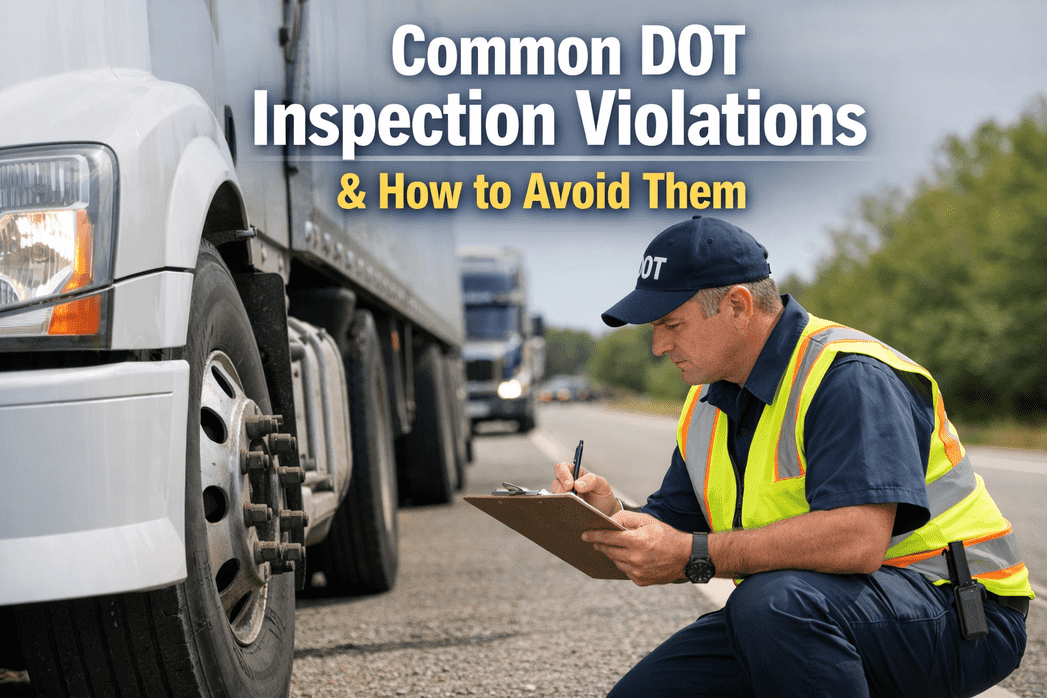
In 2025, CVSA inspectors examined 56,178 commercial motor vehicles during the International Roadcheck and placed 22.6% out of service — meaning roughly 1 in 5 trucks failed on the spot. The top vehicle violations have remained remarkably stable year over year: brakes, tires, and lights account for over 75% of all out-of-service orders. These are not exotic failures. They are the same defects that a thorough pre-trip inspection catches every time. On the driver side, hours-of-service violations led at 32.4%, followed by no CDL at 24.4% and no medical card at 14.9%. The financial impact extends far beyond the roadside fine. A single out-of-service violation triggers CSA score damage that can increase insurance premiums by 10-30%, cost shipper relationships (five of seven BASICs are publicly visible), and escalate audit likelihood. Operating an out-of-service vehicle carries fines up to $19,277 per occurrence. Recordkeeping violations can reach $1,584 per day up to $15,846 total. One company was fined $2.5 million for improper records; another paid $3.6 million for neglecting mandatory inspections. Only 7% of motor carriers pass DOT audits without a single violation. The other 93% face fines, out-of-service orders, or worse. This guide breaks down the most common DOT inspection violations with real 2025 CVSA data, the penalties they carry, how they affect your CSA score, and exactly how to prevent them with structured digital inspections. Book a demo to see how HVI digital inspections prevent DOT violations, or start your free trial of HVI's FMCSA-compliant DVIR and fleet compliance platform.
Common DOT Inspection Violations and How to Avoid Them
2025 CVSA Roadcheck data: 56,178 inspections, 22.6% vehicle out-of-service rate. Brakes, tires, and lights cause 75%+ of failures — all preventable with proper inspections.
Top 10 Vehicle Out-of-Service Violations (2025 CVSA Data)
These violations have remained in the same ranking for multiple consecutive years. They are predictable — and preventable. Source: CVSA 2025 International Roadcheck results and FMCSA roadside inspection data.
Adjustment out of spec, defective linings, air leaks, inoperative brakes. The #1 out-of-service category every single year. Combined with the "20% defective brakes" category (#3 below), brake-related issues account for over 40% of all vehicle OOS violations. Brake inspection requires under-vehicle access — this is why Level I inspections (which include under-vehicle) catch issues that walk-around Level II inspections miss.
Prevention: Daily brake check during pre-trip (pushrod stroke, air pressure build-up/leak-down, low-air warning). Quarterly brake adjustment checks. Annual brake inspection per 49 CFR 396 Appendix A. HVI tracks brake inspection history and flags overdue service intervals.
Flat, underinflated (below 50% max pressure), insufficient tread depth, exposed cord, improper load rating, damaged sidewalls. 2,899 tire OOS violations at the 2025 Roadcheck alone. Tires were the 2025 Roadcheck vehicle focus area. FMCSA data shows "leaking or inflation less than 50%" was the 4th most-cited violation nationwide with 65,184 violations through August 2025.
Prevention: Pre-trip tire pressure check with calibrated gauge (not just visual/kick). Tread depth measurement (minimum 4/32" steer, 2/32" drive/trailer). Document tire condition with photos during inspection. HVI captures tire condition as a standard checklist item with photo evidence.
When 20% or more of a vehicle's (or combination's) brakes are defective, the entire vehicle is placed out of service. This is a separate category from individual brake violations (#1) and compounds the brake problem. A tractor-trailer combination with 10 brake positions only needs 2 defective brakes to trigger this OOS condition.
Prevention: Complete brake system evaluation at every PM interval. Track brake condition per axle position. Identify patterns: which positions wear fastest on which routes? HVI logs brake condition by position for trend analysis.
Inoperative clearance markers, tail lights, turn signals, brake lights, reflectors. Known as the "gateway violation" — a broken light visible during approach often triggers a deeper Level I inspection that finds additional defects. Lights are the easiest item to inspect and the cheapest to fix, yet they remain in the top 5 every year.
Prevention: Complete lighting check every pre-trip: walk-around with all lights activated. Replace burned-out bulbs immediately — do not defer. HVI pre-trip checklists include every lighting position with pass/fail documentation.
Cargo not secured to prevent leaking, spilling, blowing, or falling. Vehicle components or dunnage not secured. 18,108 cargo securement violations issued in 2025. This is the 2026 International Roadcheck vehicle focus area — expect increased enforcement. Inspectors will specifically target securement during May 12-14, 2026.
Prevention: Verify securement before departure and after every stop. Check tie-down tension, blocking, bracing. Know the weight-based requirements: one tiedown per 1,100 lbs for articles under 5 ft, two for 5-10 ft. HVI captures cargo securement verification as part of departure inspection.
Steering wheel free play exceeding limits, loose or missing components, power steering leaks. Less common but high-severity — steering failures directly cause loss-of-control crashes.
Prevention: Check steering wheel play during pre-trip. Inspect power steering fluid level and hose condition. Report any steering abnormality immediately as a critical defect.
Cracked or broken leaf springs, leaking air bags, worn bushings, broken U-bolts. Suspension failures affect braking distance and vehicle stability.
Prevention: Visual inspection of suspension components during walk-around. Listen for air leaks at air bag connections. Check for uneven ride height indicating spring failure.
Fifth wheel defects, pintle hook wear, drawbar issues, safety chain/cable problems. Coupling failures can result in trailer separation — among the most dangerous CMV incidents.
Prevention: Tug test after every coupling. Visual check of fifth wheel locking mechanism, kingpin condition, and safety devices. Document coupling condition in pre-trip inspection.
Fuel leaks, improper fuel tank mounting, missing caps. Fuel system violations are fire hazards and environmental violations simultaneously.
Prevention: Check for fuel leaks under vehicle and around tank connections. Verify fuel cap is present and sealed. Report any fuel odor or visible drips as immediate defects.
Exhaust leaks under cab or sleeper, missing or damaged components, DPF/SCR system faults that cause visible emissions.
Prevention: Listen and look for exhaust leaks during pre-trip. Check exhaust system mounting and connections. Report any exhaust entering the cab immediately.
Top 5 Driver Out-of-Service Violations (2025)
Driving beyond allowed hours, insufficient off-duty time, 60/70-hour violations. 1,076 drivers placed OOS at 2025 Roadcheck. HOS violations remain #1 every year despite ELD mandates.
Operating without proper CDL class or endorsements for the vehicle/cargo type. Immediately places driver out of service — vehicle cannot move until a properly licensed driver arrives.
Missing or expired DOT medical certificate. Since June 2025, medical examiners submit results electronically. Paper MEC waiver expired January 10, 2026 — certification must be linked to CDL record.
Falsified record of duty status. 332 OOS violations at 2025 Roadcheck (10% of all driver OOS). 2026 Roadcheck driver focus area: ELD tampering, falsification, and manipulation. 58,382 false log violations nationwide in 2025.
Operating with a suspended commercial driver's license. States now required to downgrade CDL privileges for drivers in "prohibited" Clearinghouse status in 2026.
DOT Violation Penalties and Fines (2025-2026)
FMCSA civil penalties were most recently updated May 30, 2025. Fines have increased by a multiplier of 1.02598. These are maximums — actual penalties vary by severity, history, and cooperation. But the real cost extends far beyond the fine itself.
Per occurrence. Operating a vehicle after it has been placed out of service until violations are corrected.
Incomplete, inaccurate, or false records. Missing maintenance logs, inspection records, or driver qualification files. Each day is a separate offense.
Continuing operations after receiving a final "unsatisfactory" safety rating and being placed out of service.
Per offense. When any violation results in death, serious illness, severe injury, or substantial property destruction.
Conducting operations during a period of suspension or revocation of operating authority.
FMCSA considers historical data. Carriers with poor CSA scores or unresolved violations face escalated penalties for similar offenses. Early correction is critical.
How Violations Impact Your CSA Score (2026 Changes)
The CSA Safety Measurement System underwent its most significant overhaul since 2010, with full enforcement starting February 2026. Every violation now counts more visibly in your carrier profile.
FMCSA replaced the 1-10 severity scale with two tiers: OOS violations receive a weight of 2, all other violations receive a weight of 1. Over 2,000 individual violation codes consolidated into approximately 100 broader groups. Every violation counts more visibly.
Vehicle Maintenance now has two categories: standard "Vehicle Maintenance" for issues found during inspections and routine maintenance, and a new "Vehicle Maintenance: Driver Observed" for violations drivers should have caught during walk-around pre-trip inspections (bald tires, broken lights, obvious leaks). Pre-trip inspection quality is now a direct, separate CSA score factor.
Carriers with CSA scores exceeding thresholds are 79% more likely to be involved in crashes. Insurance underwriters use CSA scores to assess risk — even modest score increases result in premium hikes of 10-30% or more at renewal. Some carriers find it difficult to obtain coverage at all.
Five of seven BASICs (now "Compliance Categories") are publicly visible to anyone. Shippers, brokers, and 3PLs increasingly check CSA scores when selecting carriers. High scores mean lost freight contracts — the revenue impact often exceeds the fine itself.
How HVI Prevents DOT Inspection Violations
Every top vehicle violation — brakes, tires, lights, cargo securement, steering, suspension, coupling — is a pre-trip inspection item. The vehicles that fail DOT inspections are the vehicles with incomplete or missing pre-trip inspections. HVI makes pre-trip inspections thorough, documented, and audit-ready.
Pre-built inspection checklists covering all 37+ Level I items for tractors, 28+ for trailers. Every brake position, every light, every tire, every coupling component. Drivers cannot skip items — the checklist enforces completeness. eDVIR compliant per March 2026 FMCSA clarification.
Drivers attach photos to inspection items — tire condition, brake components, lights, cargo securement. Photo evidence creates an auditable record that demonstrates inspection thoroughness. During DOT audit, photos prove your drivers actually looked at the equipment, not just checked boxes.
When a driver reports a defect, HVI automatically generates a prioritized work order with the defect description, photos, severity level, and vehicle identification. The defect is tracked through repair to completion. No defect falls through the cracks between driver report and mechanic action.
Real-time visibility into fleet inspection compliance: which vehicles are current, which are overdue, which have open defects. Fleet managers see compliance status across every vehicle on every route. No more surprises at the scale — you know your fleet's status before the inspector does.
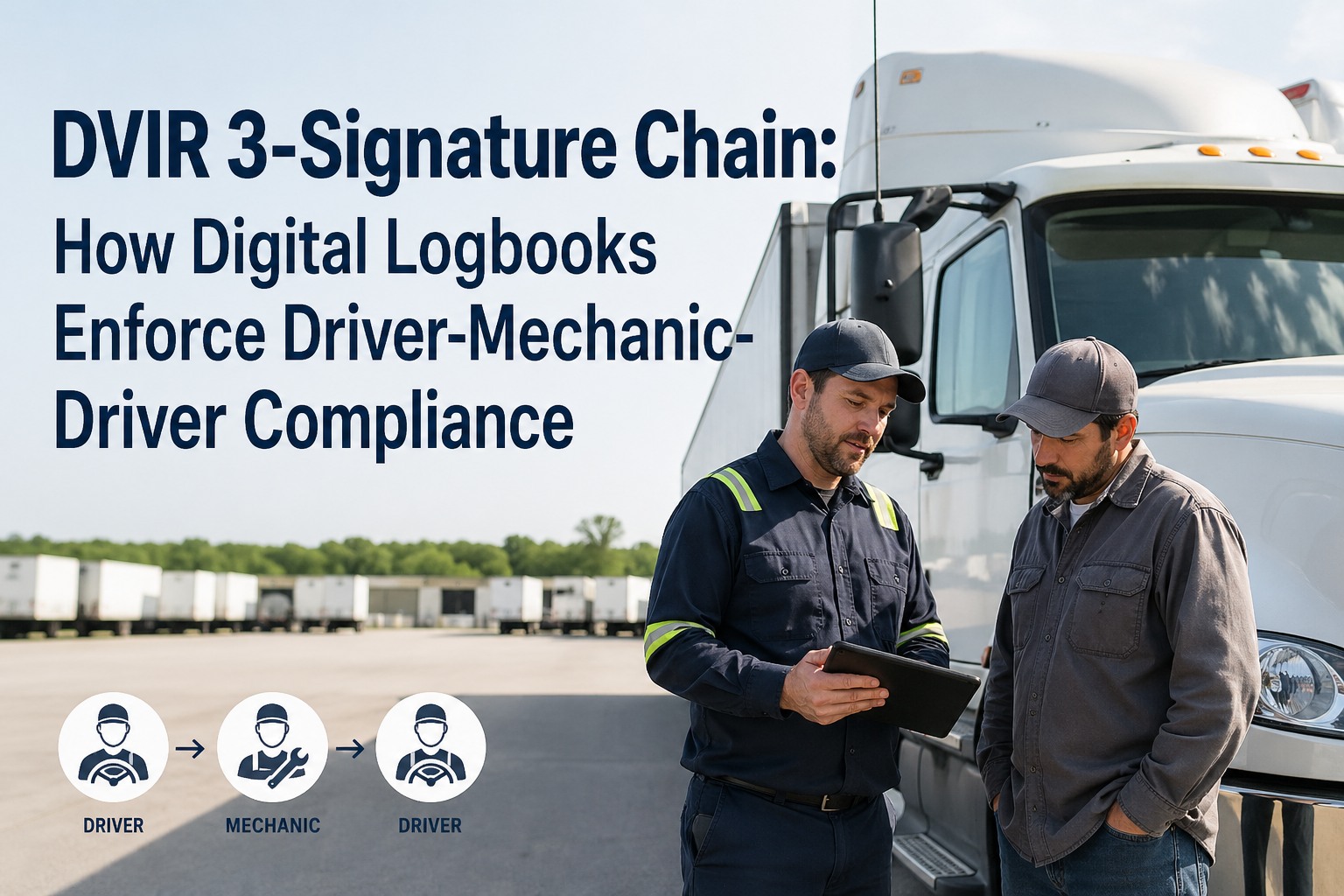
Every inspection is timestamped, GPS-tagged, and signed by the driver. Three-signature chain (driver, reviewer, mechanic) for DVIR compliance. 6-month retention meets FMCSA data requirements. When the auditor asks for your inspection records, you hand them a digital archive — not a filing cabinet of illegible paper forms.
The new "Driver Observed" Vehicle Maintenance category means pre-trip inspection quality directly affects your CSA score. HVI creates a documented record of thorough, systematic inspections that demonstrates a proactive maintenance program. During compliance reviews, this documentation can offset violation impact.
Frequently Asked Questions
Brake system defects are the #1 vehicle out-of-service violation every year. In 2025, brake system violations accounted for 24.4% of all vehicle OOS violations. When combined with the "20% defective brakes" category (16.7%), brake-related issues cause over 40% of all vehicle out-of-service orders. HVI's pre-trip checklist includes every brake position with pushrod stroke, air pressure, and component condition checks. Book a demo to see brake inspection and DOT violation prevention workflows.
Direct fines range from $1,584/day for recordkeeping violations up to $232,762 per offense when violations cause death or serious injury. Operating an out-of-service vehicle carries fines up to $19,277. But the real cost includes CSA score damage (10-30% insurance premium increase), lost shipper relationships, audit escalation, and vehicle downtime during repairs. Prevention through systematic inspections costs a fraction of enforcement. Start your free trial of HVI's DOT compliance inspection platform to begin documenting inspections today.
DOT violations typically remain on the driver's or carrier's record for 3-5 years. Under the 2026 CSA overhaul, the Safety Measurement System now uses a 12-month violation window (reduced from 24 months), but historical patterns still influence enforcement decisions. Carriers with demonstrated improvement through structured compliance programs may see reduced intervention priority. See how HVI builds your fleet compliance record and protects your CSA score.
Inspections can be random, but visible defects dramatically increase your odds. A broken light, obvious tire issue, or air leak during approach often escalates a simple credential check (Level III) into a full Level I inspection. This is why lighting is called the "gateway violation" — it invites deeper inspection. Keeping visible items in perfect condition is your first line of defense. Book a demo to see HVI's pre-trip and post-trip DOT inspection workflows.
The biggest change is the Vehicle Maintenance BASIC split: violations that drivers should catch during pre-trip (bald tires, broken lights, leaks) now feed a separate "Driver Observed" category. This makes inspection quality a direct, visible factor in your carrier profile. Other changes include simplified 2-tier severity weights (OOS=2, others=1), consolidated violation codes, and 12-month scoring windows. Start your free trial of HVI's digital DVIR platform — HVI documents the inspection quality that protects your CSA score under the new 2026 rules.
May 12-14, 2026. Vehicle focus: cargo securement (18,108 violations in 2025). Driver focus: ELD tampering and falsification. Additional 2026 CVSA enforcement events include Operation Safe Driver Week (expected July), Brake Safety Week (August 23-29), and an unannounced Brake Safety Day with no advance notice. HVI keeps your fleet DOT inspection-ready year-round — not just during CVSA enforcement events. Book a demo to see how HVI prevents DOT roadside violations and out-of-service orders.
93% of Carriers Fail DOT Audits. Be in the 7% That Pass.
Every top DOT violation — brakes, tires, lights, cargo securement — is a pre-trip inspection item. Digital inspections with photo evidence, defect-to-work-order tracking, and audit-ready documentation are the difference between passing and failing. HVI makes it systematic.
No credit card • FMCSA-compliant eDVIR • 37-point Level I checklists included • Audit-ready from day one