93% of motor carriers fail their DOT audit with at least one violation — averaging six violations per audit. Fines now reach $19,277 per HOS infraction, $16,000+ for Clearinghouse violations, and $13,300-$53,203 for maintenance violations. In 2026, FMCSA overhauled its CSA Safety Measurement System, split Vehicle Maintenance into two scoring categories (making your DVIR quality visible for the first time), officially authorized electronic DVIRs, and started revoking CDLs for unresolved Drug and Alcohol Clearinghouse violations. The enforcement environment has never been more aggressive — and the fleets still running compliance on spreadsheets and filing cabinets are the ones getting cited. HVI automates the compliance functions that DOT auditors examine first: DVIRs with enforced 3-signature chains, maintenance records with defect-to-repair documentation, annual inspection tracking with 90-day advance alerts, and the audit-ready record retrieval that produces any document in seconds — not the hours it takes to search filing cabinets. Whether you run 5 trucks or 5,000, DOT compliance isn't a department — it's a system. HVI is that system. Take 2 minutes to check your fleet's DOT readiness.
93%
of carriers fail audits with violations
$16K+
average fine per DOT incident
6
average violations per audit
7%
of carriers pass audits clean
Is Your Fleet DOT-Ready?
Most fleets discover compliance gaps during audits — not before. A 15-minute walkthrough with our compliance team identifies your exposure before FMCSA does.
What HVI Covers: Four Compliance Pillars
DOT compliance isn't a single checkbox — it's four interconnected systems that auditors examine as a chain. A gap in any one pillar triggers findings across all of them.
01
DVIRs & Daily Inspections
49 CFR 396.11 / 396.13
eDVIR authorized March 23, 2026: FMCSA final rule eliminates all legal ambiguity. Digital DVIRs with timestamps, GPS, and photos are explicitly compliant — and more defensible than paper in audits and litigation.
3-signature chain enforced: Driver reports defect → mechanic certifies repair → next driver acknowledges. HVI enforces all three signatures digitally. Missing any one is among the most cited audit violations.
Instant defect routing: Every defect auto-generates a work order with photos, severity, and asset ID. Maintenance is aware in under 60 seconds — not when someone finds the paper DVIR in the cab.
3-month retention: DVIRs stored digitally with automatic retention management. Searchable by vehicle, date, driver, or defect. Auditor gets what they need in seconds.
02
Vehicle Maintenance Records
49 CFR 396.3
Systematic inspection program: Every vehicle has a documented maintenance file — ID record, PM schedule, service history, linked inspections. Retained for vehicle service life + 6 months.
Defect-to-repair chain: Every inspection defect links to a work order, which links to the repair record, which links back to the DVIR. Complete audit trail from discovery to resolution.
PM completion tracking: Automated scheduling with alerts. PM completion rates visible fleet-wide. Overdue PMs flagged to management before they become audit findings.
CSA Vehicle Maintenance score: The 2026 CSA split creates "Vehicle Maintenance" + "Vehicle Maintenance: Driver Observed" categories. Your maintenance program quality is now visible in two separate scores.
03
Annual DOT Inspections
49 CFR 396.17 / 396.19 / 396.21
15 Appendix A categories: Digital checklists covering brakes, coupling, exhaust, fuel, lighting, steering, suspension, frame, tires, wheels, glazing, wipers, horn, rear guards, and safe loading.
90-day lookahead scheduling: HVI calculates when each vehicle's annual is due and sends 90/60/30-day advance alerts. Best practice: 11-month scheduling for zero-lapse compliance.
Inspector qualification tracking: Store credentials per 396.19. Track expiration dates. Auditors regularly request these records — missing qualification documentation is a violation regardless of inspection quality.
14-month report retention: Digital storage with proof-on-vehicle tracking (report or decal). Sticker photo documentation. Every vehicle's annual status visible at a glance.
04
OOS & Roadside Management
49 CFR 396.9 / CSA SMS
Roadside inspection response: When a vehicle receives a roadside inspection report, HVI tracks the 15-day correction and return window. Documented corrective actions submitted on time — missed deadlines escalate to management.
CSA score monitoring: Track your compliance categories monthly. The 2026 overhaul consolidated 950+ violation codes into ~100 groups. OOS violations carry severity weight 2. Clean inspections now actively improve your score.
DataQ challenge support: When roadside data is incorrect, HVI's documentation provides the evidence needed to challenge violations through the DataQs system — with timestamped, photo-verified records.
Pre-trip readiness: Before dispatch, verify every vehicle has current DVIR with no unresolved defects, current annual inspection, and active registration. Never dispatch a vehicle that will fail a roadside check.
HVI covers all four compliance pillars on one platform — DVIRs, maintenance records, annual inspections, and roadside management — with the automation that prevents violations before they happen.
Book a quick call to assess your compliance gaps.
Top FMCSA Violations & What They Cost
These are the violations FMCSA cites most frequently — and the ones that cost fleets the most in fines, CSA score damage, and operational disruption. Every one is preventable with proper documentation.
1
Vehicle Maintenance Violations
$13,300 – $53,203
Largest violation category by volume. Now split into two CSA categories in 2026. Brake adjustment, lighting defects, and tire condition are the most common items. OOS violations carry 2x severity weight.
HVI: automated PM scheduling, inspection-to-WO chain, defect resolution tracking
2
Hours of Service Violations
Up to $19,277/infraction
32.4% of driver OOS violations at 2025 Roadcheck. ELD falsification, driving beyond limits, and yard move misuse are top findings. Cumulative daily penalties of $1,584 with $15,846 maximum.
HVI: integrates with ELD providers; inspection timestamps create independent compliance verification
3
Driver Qualification File Gaps
$16,000+/violation
Missing or expired MVRs, incomplete employment verification, expired medical certificates (paper MECs expired Jan 10, 2026 — must use MVR verification now). Stale files = immediate audit findings.
HVI: DQ file expiration tracking, automated alerts 90/60/30 days before deadlines
4
Drug & Alcohol Clearinghouse
$16,000+/violation + CDL revocation
7,000+ violations in 2025 for missed queries alone. FMCSA actively revoking CDLs for unresolved "prohibited" status. Pre-employment full queries and annual limited queries are mandatory — no exceptions.
HVI: Clearinghouse query reminders, driver status tracking, documentation management
5
DVIR / Inspection Documentation
$1,270/day per vehicle
Missing DVIRs, incomplete 3-signature chain, defects without repair certification, vehicles dispatched with unresolved defects. Paper DVIRs are the #1 source of documentation gaps.
HVI: enforced eDVIR workflow, automated signature chain, dispatch lock until repair certified
Fleet Size Doesn't Matter — Compliance Does
Whether you run 5 trucks or 5,000, FMCSA applies the same standards. HVI scales from owner-operators to enterprise carriers with the same compliance rigor.
5–25 Vehicles
Owner-operators and small carriers. Often the most vulnerable to audit exposure because compliance is managed by the same person running operations. One person can't track every DVIR, every DQ file expiration, every annual inspection due date, and every Clearinghouse query across 25 drivers and vehicles. HVI automates what one person can't remember.
25–200 Vehicles
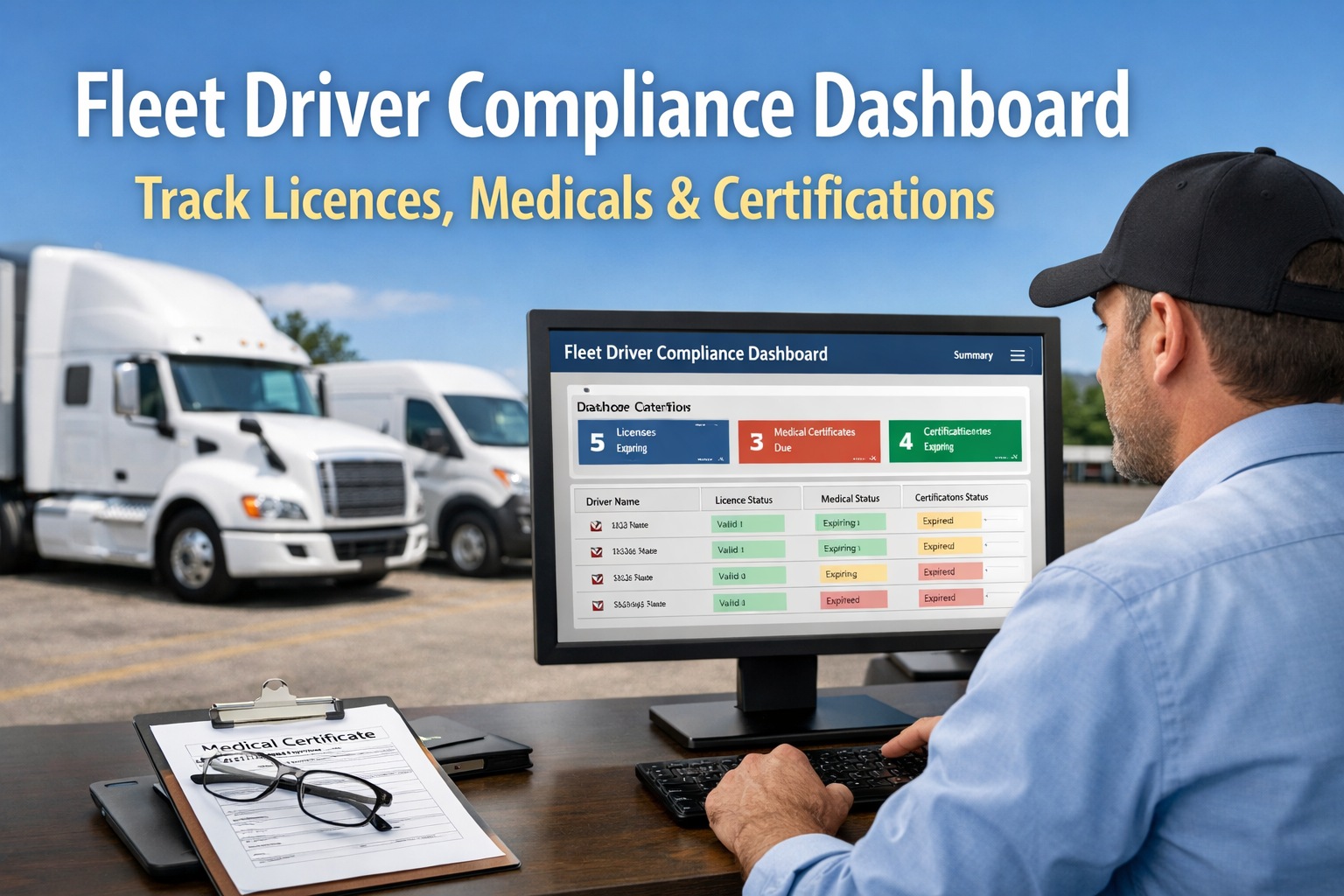
Mid-size carriers and regional fleets. Compliance complexity grows exponentially — multiple terminals, driver turnover creating DQ file gaps, vehicles moving between locations. Spreadsheet tracking breaks at this scale. HVI provides fleet-wide compliance dashboards with real-time status across every vehicle and driver.
200–5,000+ Vehicles
Enterprise carriers and national fleets. Multi-state operations subject to both federal and state-specific requirements. Dedicated safety departments need tools — not more spreadsheets. HVI integrates with existing TMS, ELD platforms (Samsara, Motive, Geotab, PeopleNet), and ERP systems via API.
Want the DOT Compliance Audit Prep Guide?
Complete preparation guide covering every document auditors request, how to organize your files, and the 10 most common findings to fix before they arrive. We'll walk you through it in a quick call.
2026 Regulatory Changes You Need to Know
Mar 23, 2026
eDVIR officially authorized — FMCSA-2025-0115 final rule. Electronic DVIRs explicitly compliant under 396.11/396.13. No more legal gray area.
Feb 2026
CSA overhaul fully enforced — Vehicle Maintenance split into two categories. 950+ violations consolidated to ~100 groups. OOS = severity weight 2. 12-month violation window. New utilization factor (250K VMT).
Jan 2026
Paper MECs expired — Medical certification now verified exclusively through MVRs. Carriers must pull current MVR to verify driver medical status. Paper cards no longer valid after Jan 10.
Jan 2026
Non-compliant ELDs removed — PSS ELD, Black Bear ELD, RT ELD Plus revoked. Drivers using removed ELDs placed OOS effective Jan 20. Carriers must replace immediately.
Ongoing 2026
Clearinghouse enforcement intensifying — FMCSA revoking CDLs for unresolved "prohibited" status. 7,000+ violations in 2025 for missed queries. Annual limited queries + pre-employment full queries mandatory.
June 2026
CVSA Roadcheck — Annual 72-hour blitz. 2026 focus: cargo securement + ELD tampering. Plus unannounced Brake Safety Day. Your inspection quality determines your roadside outcome.
Frequently Asked Questions
Q: Does HVI help prepare for FMCSA audits?
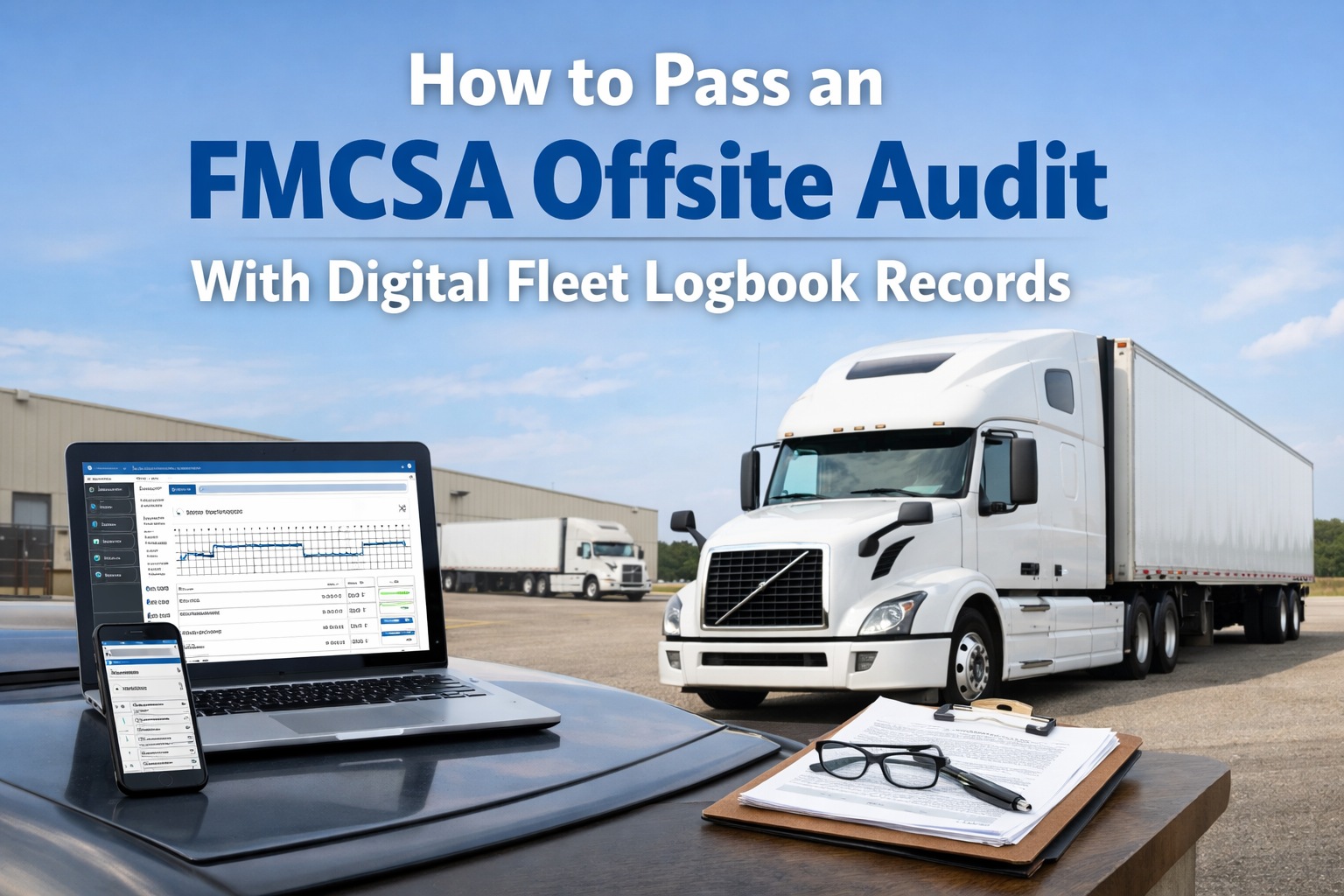
Yes — HVI generates audit-ready documentation with one click: complete DVIR histories, maintenance records with defect-to-repair chains, annual inspection reports with inspector qualifications, and fleet compliance dashboards. Fleets using HVI report 75% reduction in audit preparation time. Most teams are audit-ready within 30 days of implementation.
Book a call to discuss your audit readiness.
Q: Is the app available in Spanish?
HVI supports multilingual operations. The inspection interface is designed for diverse workforces — clear visual prompts, guided checklists, and photo-based documentation that minimize language barriers during inspections.
Q: Does HVI integrate with our ELD system?
HVI integrates with major ELD and telematics providers including Samsara, Motive (KeepTruckin), Geotab, and PeopleNet. Engine hours and fault codes feed directly into PM scheduling. The integration creates a unified compliance view — ELD data + inspection records + maintenance history on one platform.
Q: Does HVI have API access for enterprise integration?
Yes — HVI provides API access for integration with existing TMS, ERP, and fleet management systems. Enterprise carriers can connect HVI's inspection and compliance data to their broader technology stack without manual data transfer.
Q: How quickly can we be operational?
Most fleets are operational on HVI within 1-2 weeks. Basic implementation: account setup, vehicle import, user training (30 minutes per role), and first inspections completed within days. No hardware installation. No IT infrastructure changes. If your drivers have phones, you can start tomorrow.
Q: What about data security?
HVI uses enterprise-grade security: encrypted data transmission, secure cloud storage, role-based access controls, and complete audit trails for all system activity. Your compliance data is protected with the same standards required for regulated industries.
Don't Wait for the Audit to Find Your Gaps
HVI automates DVIRs, maintenance records, annual inspections, and CSA score management — keeping your fleet compliant 24/7, not just when you remember to check.