In 2026, HOS compliance is no longer just a driver responsibility — it is one of the most critical factors determining whether your fleet passes roadside inspections, survives DOT audits, and avoids costly out-of-service orders. FMCSA data shows HOS violations are the single most cited issue in commercial vehicle inspections, yet 68% of fleets still manage driver logs and vehicle inspection records in disconnected systems that create compliance gaps before an officer even approaches the truck. Fleets using integrated inspection and HOS compliance platforms report 72% fewer roadside violations, 89% faster audit response times, and CSA scores that stay well below intervention thresholds. If you manage a commercial fleet in 2026, the question is not whether HOS rules affect your inspections — it is whether your systems are connected enough to prove compliance on demand. This guide breaks down every HOS rule, explains exactly how it flows into fleet inspection outcomes, and shows you what a modern digital compliance platform does that paper logs and standalone ELDs simply cannot. Start a free HVI trial and connect your HOS logs and vehicle inspections in one platform today, or book a 30-minute demo to see how HVI keeps your fleet inspection-ready every day.
What is Hours of Service — and why it decides your inspection outcome
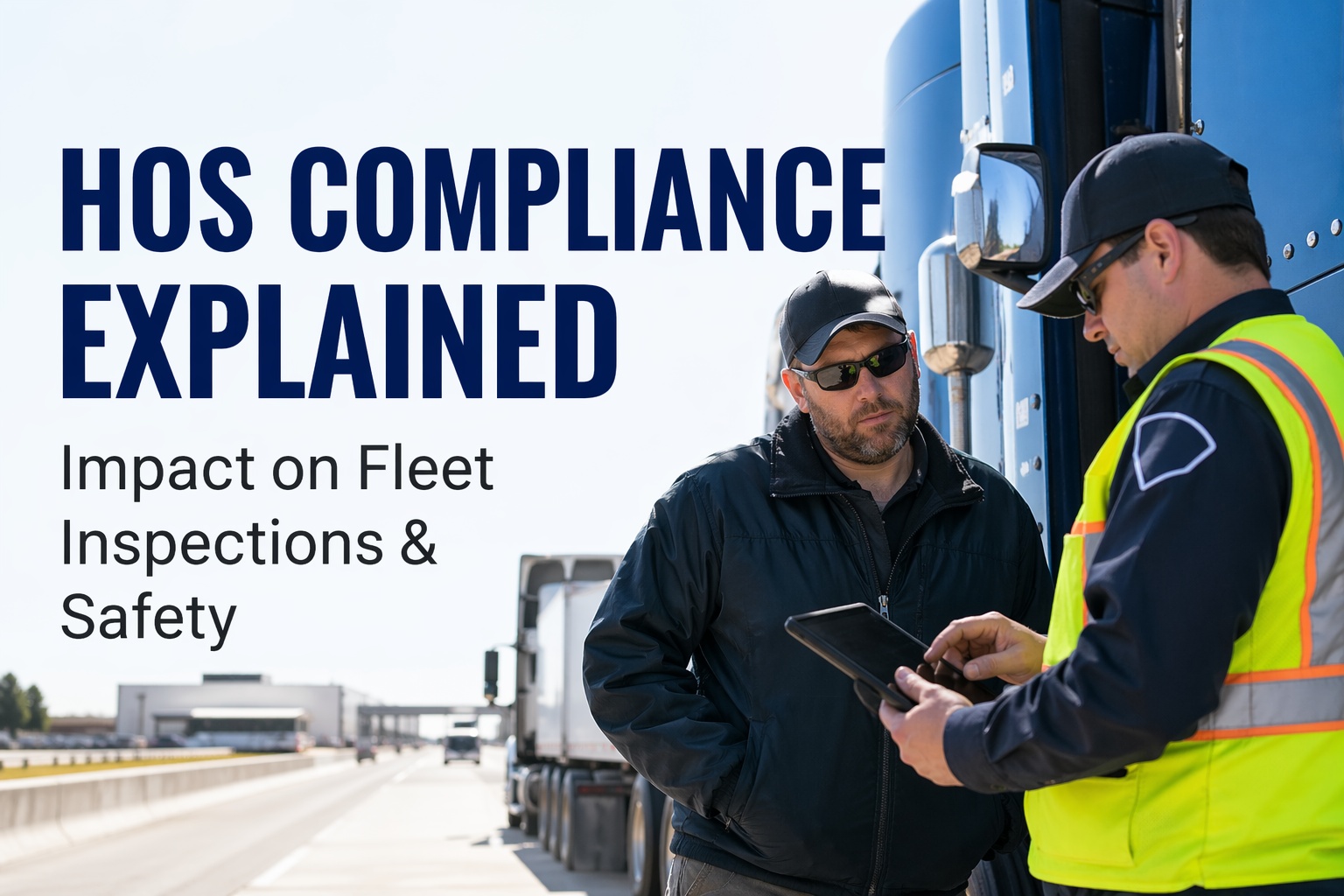
Hours of Service (HOS) regulations, enforced by the Federal Motor Carrier Safety Administration (FMCSA), set strict limits on how long commercial motor vehicle drivers can operate before mandatory rest. They exist to reduce fatigue-related accidents — but for fleet managers, they function as an inspection trigger, a CSA scoring mechanism, and an audit liability rolled into one regulation. When a DOT officer conducts a Level I or Level III inspection, HOS log review is mandatory. Any discrepancy between a driver's electronic log, the vehicle's engine data, and the filed Driver Vehicle Inspection Report (DVIR) creates an immediate violation — regardless of whether the vehicle itself is in perfect mechanical condition. This is the connection most fleets miss: HOS compliance and vehicle inspection compliance are reviewed together, scored together, and penalised together.
Property-carrying drivers cannot exceed 11 hours of driving after 10 consecutive hours off duty — the hard ceiling enforced at every inspection.
The total on-duty window including driving, loading, and pre/post-trip inspections. Cannot be extended by rest breaks taken mid-shift.
Cumulative driving hour limits over a 7- or 8-day operating period. Tracked automatically in HVI's compliance dashboard across your entire fleet.
Mandatory break after 8 cumulative driving hours. Can be off-duty, sleeper berth, or on-duty not driving — HVI flags when this window is approaching.
A 34-hour off-duty restart resets the weekly 60/70-hour clock, allowing a fresh operating cycle. HVI tracks restart eligibility per driver, automatically.
FMCSA requires 6 months of ELD records to be retained and accessible on demand. HVI stores all logs, DVIRs, and inspection records in one searchable system.
How HOS violations flow directly into fleet inspection failures
Most fleet managers think of HOS compliance and vehicle inspections as two separate workflows. They are not — they are two halves of the same compliance record, and DOT officers review them simultaneously. Here is exactly how a gap in one system creates a failure in the other, and where HVI closes each gap.
Every status change — driving, on-duty not driving, sleeper berth, off-duty — is timestamped and engine-verified. HVI integrates with all major ELD providers including Geotab, Samsara, Motive, and Verizon Connect, pulling this data automatically into your fleet compliance dashboard.
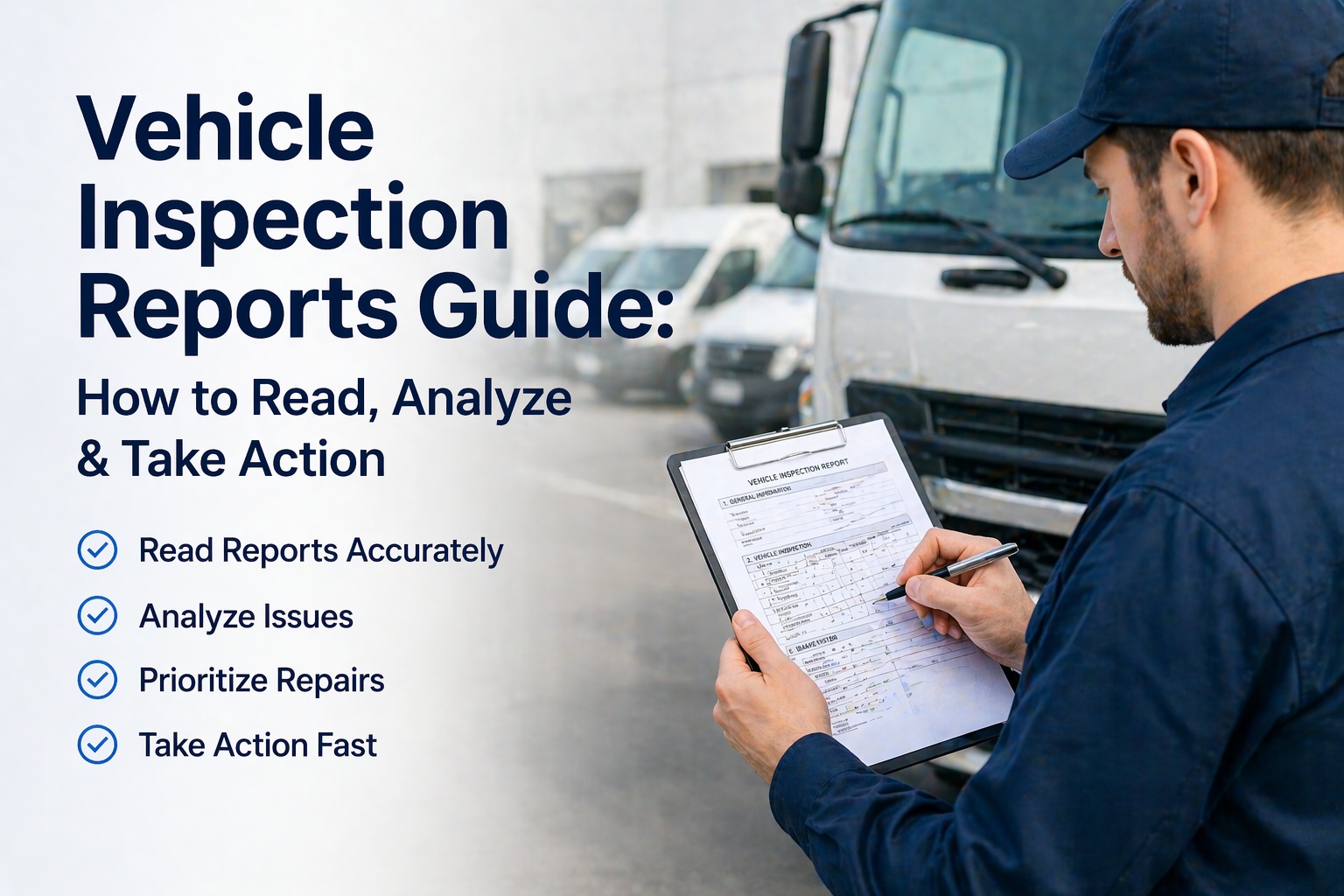
The Driver Vehicle Inspection Report is legally required pre- and post-trip. HVI's mobile DVIR tool guides drivers through every inspection point with photo capture, digital sign-off, and automatic timestamping tied to the vehicle's departure and arrival record — creating a tamper-evident compliance trail.
During a Level I inspection, the officer compares ELD log, DVIR completion, maintenance records, and vehicle condition in real time. HVI generates a single compliance export — ELD summary, DVIR history, vehicle health status, and defect resolution records — that answers every document request in under 60 seconds.
Every HOS or inspection violation found at roadside is reported to FMCSA's DataQs system and scores against your fleet's CSA BASIC ratings. HVI's compliance dashboard monitors your CSA scores in real time, flags vehicles approaching violation thresholds, and generates the corrective action documentation needed to challenge inaccurate DataQs entries before they compound.
HOS violations — what they cost and how HVI prevents them
Understanding the financial exposure of HOS non-compliance is the fastest way to justify a compliance platform investment. These are the violations found most frequently in roadside inspections and what each one actually costs your operation.
HVI prevention: Real-time drive-time alerts pushed to driver and fleet manager at 10 hours, 10.5 hours, and on approach to limit — with automatic dispatch notification to prevent vehicle re-assignment before mandatory rest is complete.
HVI prevention: HVI's immutable log audit trail flags any edit, annotation, or status change with the originating user, timestamp, and reason code — so every change is defensible and no edits go untracked.
HVI prevention: HVI blocks vehicle dispatch until a valid DVIR is completed and signed. Drivers cannot mark a trip as started until the pre-trip inspection is submitted — eliminating the "forgot to file" category entirely.
HVI prevention: HVI's dispatch dashboard shows every driver's remaining window alongside their current location and load status — so dispatchers make re-routing decisions with compliance data visible, not after the fact.
HVI prevention: HVI tracks cumulative weekly hours per driver and flags approaching cycle limits 8 hours in advance, with restart eligibility automatically calculated and shown in the scheduling view.
HVI prevention: HVI monitors ELD device health across your fleet and auto-generates malfunction notifications with the correct FMCSA notification language — and automatically switches affected drivers to paper log mode with the correct annotation.
The 5 capabilities that separate a real compliance platform from a standalone ELD
Every ELD records hours. What it cannot do alone is connect those hours to inspection records, maintenance history, vehicle health status, and CSA score trends. That connection is what turns compliance data into compliance assurance — and it is where HVI operates.
HVI maps every DVIR submission against the driver's ELD log automatically. When a pre-trip inspection is filed, HVI cross-references it with the actual departure timestamp from engine data — flagging any gap between the two before it becomes an inspection violation.
See every driver's remaining drive time, on-duty window, and weekly cycle hours on a live dashboard — updated from integrated ELD data continuously. Dispatchers assign loads with compliance data in view, not in hindsight.
HVI prevents vehicle dispatch until a compliant DVIR is on file — period. Drivers cannot start a trip, dispatchers cannot assign a load, and the system flags any vehicle with an overdue post-trip inspection before the next run begins.
HVI pulls your fleet's CSA BASIC scores and tracks the point impact of every roadside inspection result. When any BASIC score approaches the intervention threshold, HVI sends a priority alert with the specific vehicles and violation patterns driving the score increase.
When a DOT audit letter arrives, HVI generates a complete document package — 6 months of ELD summaries, DVIR history, maintenance records, defect resolution logs, and driver qualification files — formatted to FMCSA audit request specifications in under 5 minutes.
HVI scores each driver on DVIR completion rate, hours accuracy, break compliance, and defect reporting quality. Managers see a ranked compliance score per driver — so coaching conversations are based on data, not impressions, and repeat violators are identified before they create fleet-wide CSA exposure.
HOS exemptions — what applies to your fleet and how HVI manages them
Not every driver or operation is subject to standard HOS rules. FMCSA has established several exemptions that significantly change compliance requirements — and misapplying them is itself a violation. HVI tracks exemption eligibility automatically based on vehicle type, operating territory, and trip distance.
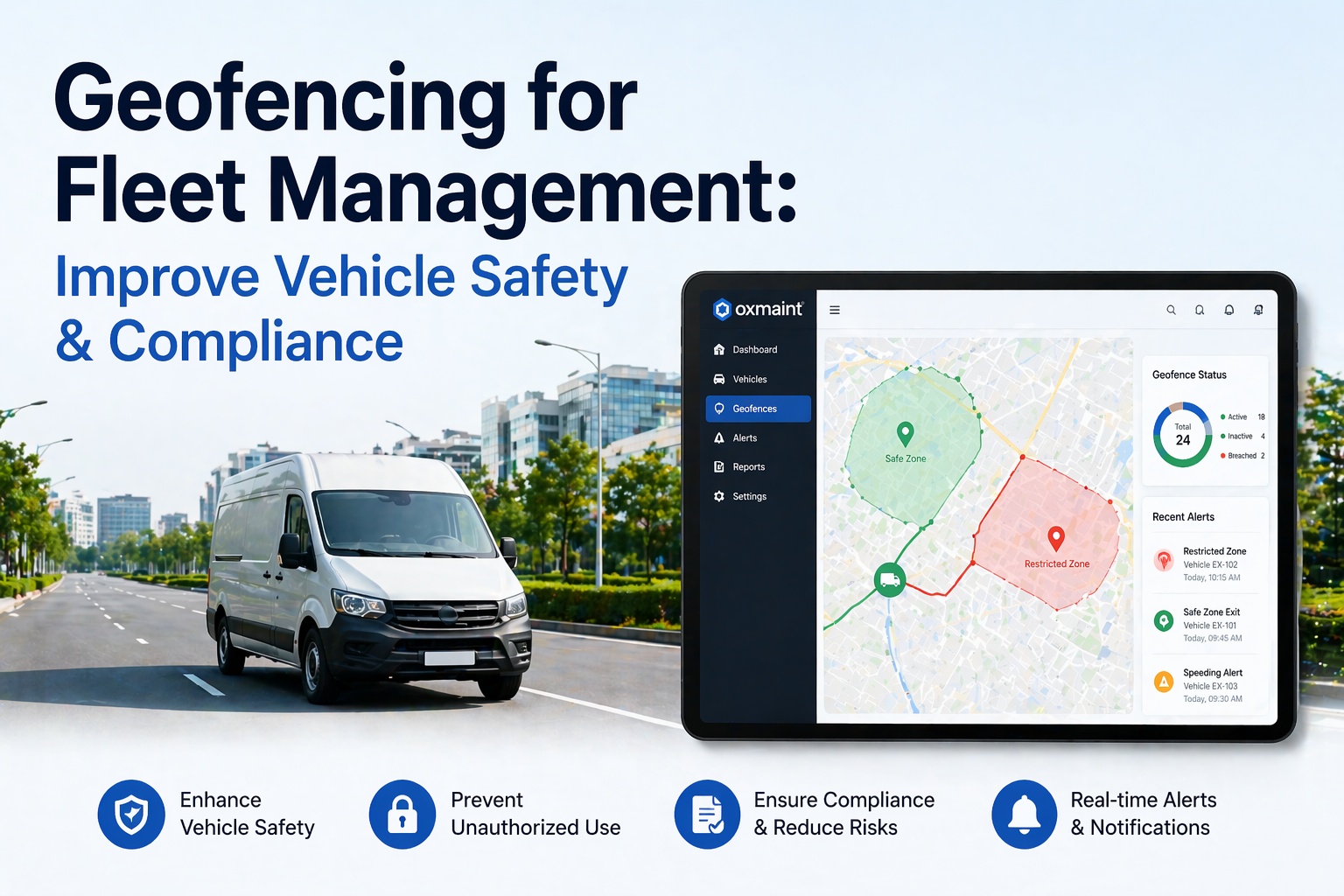
Drivers operating within 150 air miles of their reporting location who return each day are exempt from the 30-minute break requirement and ELD mandate. HVI's geofencing automatically flags when a driver exceeds the short-haul radius and switches their compliance mode accordingly.
Drivers may extend their drive time by up to 2 hours when encountering unexpected adverse weather or road conditions en route. This exemption must be documented in the ELD log with the reason. HVI's mobile app includes a one-tap adverse conditions notation that creates the compliant ELD annotation automatically.
During planting and harvest seasons, agricultural commodity transport is exempt from HOS rules within 150 air miles of the source. HVI manages seasonal exemption windows by fleet type and notifies managers when exemption periods open or close based on FMCSA seasonal declarations.
FMCSA issues emergency declarations that suspend HOS requirements for specific geographic areas and cargo types during natural disasters or supply emergencies. HVI monitors active FMCSA emergency declarations and flags applicable vehicles and routes for your fleet managers in real time.
What HVI's compliance platform does — from driver log to audit pass
HVI is not a standalone ELD and it is not a generic fleet management system. It is an inspection and maintenance compliance platform built specifically to connect every element of your fleet's compliance record — so the individual pieces that DOT officers, FMCSA auditors, and insurance reviewers examine separately are unified, consistent, and defensible from a single source.
Frequently asked questions — HOS compliance and fleet inspections
Your next inspection is coming. Is your compliance record ready?
HVI connects your ELD data, DVIR records, maintenance history, and CSA scores into one always-current compliance platform. When an officer pulls up to your vehicle, HVI means your records are complete, consistent, and produced in under 60 seconds — not assembled in a panic. No new hardware. Connects to your existing ELD in under 30 minutes. Free to trial.
No credit card required · Works with 200+ ELD providers · DVIR compliance active within 24 hours